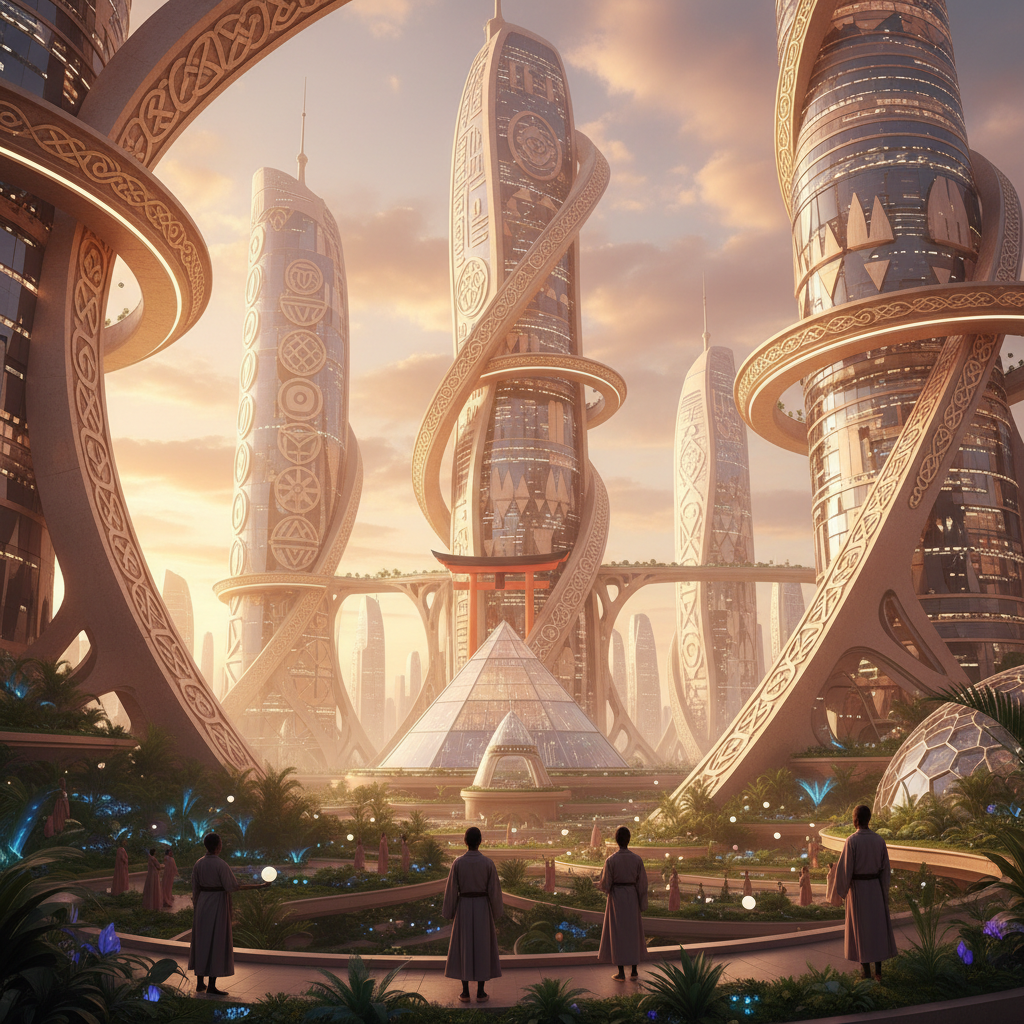
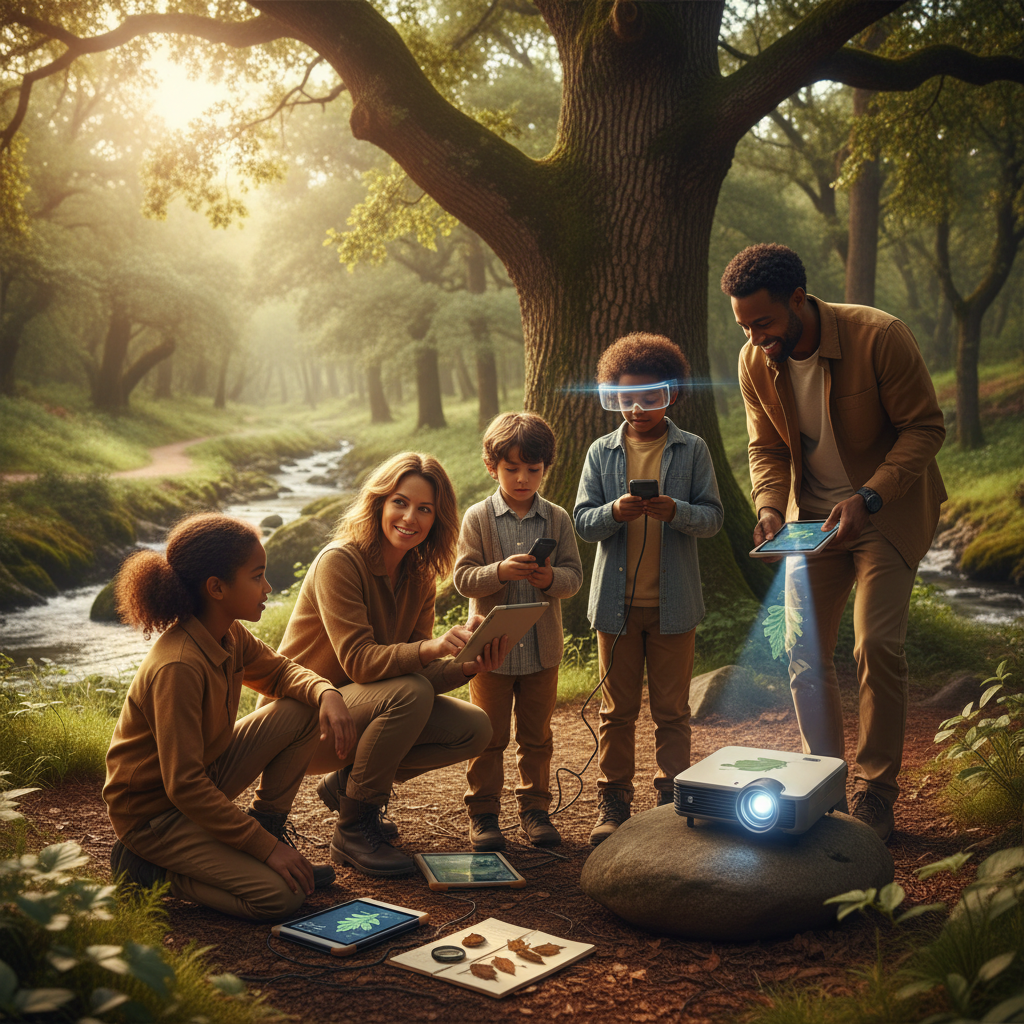
What if the most important thing a child could learn in school had nothing to do with a test? What if it had everything to do with how they listen — to a problem, to another person, to the quiet intelligence of a forest floor?
We are at a threshold. The world our children are inheriting is not the world education was designed for. And somewhere, beneath the standardized scores and packed curriculums, a deeper question is stirring — not just what we teach, but who we are teaching children to become.
This is the conversation about conscious evolution. And it begins, gently but urgently, in the classroom.
The Limits of What We've Called Learning
For over a century, formal education has been built on a particular assumption: that learning is primarily the transfer of information. Memorize, recall, repeat. The brain as vessel. Knowledge as cargo. Success as output.
It served a purpose. But it was never the whole picture.
Research in neuroscience and developmental psychology has quietly dismantled this model from the inside. Harvard's Center on the Developing Child has shown that executive function skills — the capacity to manage emotions, focus attention, and navigate complexity — are more predictive of long-term wellbeing and success than academic knowledge alone. Yet these are precisely the capacities most education systems treat as secondary, or ignore entirely.
The gap between what we teach and what life actually asks of us grows wider every generation. And children feel it. Many of them know, at some cellular level, that something essential is missing.
"The aim of education is not the acquisition of information, but the ability to think, feel, and act with wisdom and compassion."
— Krishnamurti, philosopher and educator
Conscious evolution in education doesn't mean dismantling knowledge. It means expanding what we consider worth knowing — and how we come to know it.
What an Evolved Education Feels Like
Imagine a school day that begins not with a bell, but with breath. A moment of stillness — not as a spiritual ritual, but as a neurological reset. A way of saying: you are here. Your whole self is welcome.
This is already happening. Schools integrating mindfulness practices into their daily rhythms are reporting measurable reductions in student anxiety, improvements in focus, and stronger peer relationships. Not because mindfulness is magical — but because presence is foundational. You cannot think clearly, feel honestly, or connect meaningfully from a place of chronic overwhelm.
An evolved education weaves together several dimensions that traditional schooling has kept separate:
- Emotional Intelligence: Learning to name, navigate, and understand one's inner landscape — so emotions become information rather than interruption. Daniel Goleman's foundational work on emotional intelligence remains a cornerstone here, demonstrating that self-awareness and empathy are learnable skills, not fixed traits.
- Systems Thinking: Understanding that everything is interconnected — ecosystems, economies, communities. That actions have ripples. That problems are rarely linear and solutions rarely isolated.
- Creativity and Imagination: Not as arts electives, but as a core cognitive capacity — the ability to hold complexity, generate new possibility, and move fluidly between divergent and convergent thought.
- Ethics and Moral Reasoning: Not handed down as rules, but cultivated through real dialogue, exposure to diverse perspectives, and the practice of asking: what is right, and why does it matter?
- Embodiment and Nature Connection: Recognizing that the body is not separate from the mind — and that the natural world is not a backdrop to human life, but a living teacher. Children who spend time in nature show measurably improved attention, reduced cortisol levels, and greater ecological empathy, as documented by the Children & Nature Network.
These are not soft additions to a real curriculum. They are the curriculum — for a world that requires whole humans, not just skilled workers.
The Environment as Teacher
There is a reason this conversation sits within the dimension of Environment on the VIBEUP framework. Because where we learn shapes what we learn — and what we become.
A child who learns to read ecosystems develops a different relationship with complexity than one who only reads textbooks. A teenager who tends a school garden begins to understand reciprocity in a way no lecture can fully convey. A classroom that opens to a forest, even once a week, starts to feel like it belongs to something larger.
The Finnish education system — consistently ranked among the world's highest performing — places enormous emphasis on outdoor learning, student agency, and teacher-student relationship. There are fewer hours, less homework, more play, and more trust. And the results speak not just to test scores, but to student wellbeing and lifelong curiosity.
This is not coincidence. It is alignment.
When the environment reflects respect — for the child, for the natural world, for diverse ways of knowing — something opens. Students don't just learn about the world. They begin to feel themselves as part of it. That shift — from separation to belonging — may be the most important education of all.
The Teacher as Conscious Mentor
None of this is possible without a reimagining of the role of the teacher. Not as authority and information-giver, but as conscious mentor — someone who models presence, curiosity, and the ongoing practice of self-awareness.
The most transformative educators are those who understand that teaching is a relational practice. Who know that a student who feels seen learns differently than one who feels managed. Who understand that their own nervous system regulation affects the entire room — that calm is contagious, and so is anxiety.
This asks something of teachers that systems rarely support: inner work. The ongoing, courageous practice of knowing themselves — their patterns, their triggers, their growing edges. Education for conscious evolution requires educators who are consciously evolving.
And that work, quietly, is spreading. Organizations like CASEL (Collaborative for Academic, Social, and Emotional Learning) are building frameworks for social-emotional learning at every level of the educational ecosystem — student, teacher, family, and community.
A Closing Reflection
We are not waiting for the future to begin. Children are in classrooms right now, learning who they are and what the world is for. Every moment is already shaping their relationship with curiosity, with themselves, with each other, with the living world.
Conscious evolution in education is not a utopian dream. It is a series of grounded, intentional choices — made by parents, teachers, policymakers, and communities who are willing to ask a more honest question:
What kind of humans are we cultivating? And does our education system reflect that intention?
The answers don't arrive all at once. They arrive the way real learning does — slowly, in layers, through experience and reflection and returning again to what matters.
Begin there. Begin with the question.
Perhaps today, you might sit with this: What one quality — curiosity, empathy, stillness, wonder — do you most wish had been nurtured in your own education? And how might you offer that to someone younger, right now, in the way you show up?
Let that be the practice.
Further Exploration
- Harvard Center on the Developing Child — science-based research on early childhood development, executive function, and trauma-informed learning
- Children & Nature Network — research, resources, and global movement connecting children to the natural world
- CASEL: Fundamentals of Social-Emotional Learning — evidence-based frameworks for integrating emotional intelligence into educational systems