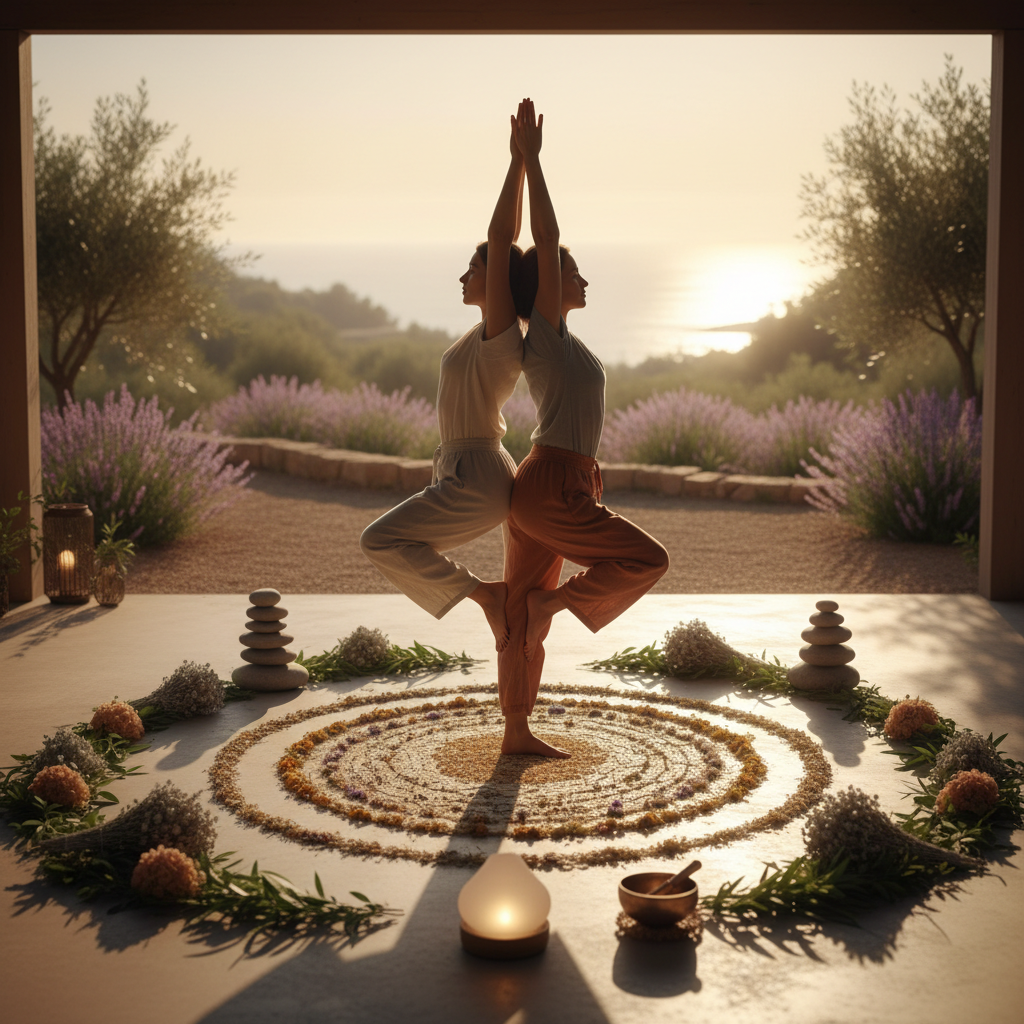

There is a moment most of us have experienced — when we knew something was true, not because we had read it somewhere, not because someone told us, but because we had lived it. It arrived quietly, without fanfare. A recognition. A settling. Like something that had always been present finally becoming visible.
That moment is the doorway into wisdom.
The Law of Wisdom — the third law in the spiritual architecture of conscious living — asks us to pause and consider something that our achievement-oriented world rarely honours: the difference between what we know and who we have become through knowing it.
Knowledge Lives in the Mind. Wisdom Lives in the Whole Being.
We live in an era of breathtaking access to information. Within seconds, you can retrieve research, philosophy, ancient texts, neuroscience findings, and spiritual teachings from across centuries. And yet — more information has not made us wiser. If anything, it has made us more anxious, more fragmented, more certain about things we've never truly tested.
Knowledge, at its core, is collected. It accumulates. You can hold a thousand facts about grief without ever having truly felt your way through loss. You can understand the neuroscience of attachment without ever doing the slow, tender work of repairing your own relational wounds.
Wisdom is different. Wisdom is metabolised. It is understanding that has passed through the fire of lived experience and returned changed — integrated into the way you see, the way you respond, the way you move through the world. It does not sit on a shelf. It breathes inside you.
"The only source of knowledge is experience."
— Albert Einstein
Neuroscience supports this distinction beautifully. Research from the University of California San Diego's Center for Healthy Aging identifies wisdom as a measurable, multi-dimensional quality — one that includes emotional regulation, empathy, self-reflection, and the ability to hold complexity and uncertainty. These are not cognitive functions alone. They are embodied capacities, forged through experience, not just study.
The Law of Wisdom, then, is an invitation to close the gap — between what you intellectually understand and what you have actually integrated into the fabric of your being.
The Three Movements of Wisdom
Wisdom does not arrive as a single revelation. It moves through us in three distinct rhythms — and recognising them can help you become a more conscious participant in your own unfolding.
1. Experience — Enter the Moment Fully
Wisdom begins not in reflection, but in presence. Something happens. A relationship ends. A dream dissolves. An unexpected joy arrives. A failure lands hard. The first movement of wisdom asks you to resist the urge to immediately understand or explain the experience — and instead, to simply be inside it.
This is harder than it sounds. Most of us reach for analysis, distraction, or narrative the moment discomfort arrives. But wisdom requires that we stay, breathe, and let the experience move through us without immediately packaging it into meaning. This is what mindful awareness practice cultivates — the capacity to witness without flinching.
2. Reflection — Let It Settle and Speak
After the experience comes the sacred pause. This is where journaling, contemplation, stillness, and honest inner dialogue become transformative tools. Reflection is not rumination — it is not replaying the story on a loop. It is gentle excavation. Asking: What did this ask of me? What did I discover about myself? What pattern was being revealed?
This is the space where raw experience begins its alchemical process — where emotion becomes insight, and confusion begins to clarify into understanding. Psychologist Dr. Judith Glaser, known for her work on conversational intelligence, noted that reflection activates the prefrontal cortex — the seat of perspective-taking and higher-order thinking — allowing us to find meaning within complexity.
3. Integration — Embody What You've Learned
This is the most overlooked movement — and perhaps the most essential. Integration means that the insight doesn't just live in your journal or your awareness. It begins to change how you act. You respond with more patience. You set a boundary without apologising. You lean into discomfort rather than retreating. You choose differently, quietly, from the inside out.
This is wisdom made flesh. This is the Law of Wisdom in its fullest expression.
Journaling as a Pathway to Wisdom
If wisdom is forged in the space between experience and integration, then journaling is one of the most reliable bridges we have. Not journaling as venting or storytelling — but journaling as conscious inquiry.
Research by psychologist James Pennebaker at the University of Texas demonstrated that expressive writing — when done with emotional depth and self-reflection — leads to measurable improvements in mental and physical health, immune function, and psychological clarity. Writing, it turns out, helps us process what experience alone cannot fully metabolise.
Here are three journaling practices to open the wisdom channel within you:
- The Integration Prompt: After any significant experience, write: "What happened? What did I feel? What does this want me to understand? How will I live differently because of this?" Move slowly through each question. Let pauses exist between your answers.
- The Contrarian Mirror: Take a belief you hold firmly — about yourself, about life, about others — and write from the perspective that the opposite might also be true. Wisdom often lives in the tension between what we believe and what we've never dared to question.
- The Embodied Reflection: Before you write, place both hands on your chest and breathe three slow, full breaths. Then ask your body: "What do you know right now that my mind hasn't caught up to yet?" Write whatever arrives, without editing.
Wisdom as a Spiritual Practice
Across spiritual traditions — from Sophia in Greek philosophy to Prajna in Buddhist teaching to Hokhmah in the Kabbalistic Tree of Life — wisdom is consistently regarded not as a destination, but as a living relationship with life itself. It is inherently humble. The wise person is never the one who has all the answers. They are the one who has learned to hold the right questions.
In the VIBEUP framework, wisdom belongs to the domain of the Internal Self — the inner landscape of thoughts, emotions, and spirit. It is the natural fruit of the Awakening stage: that opening of perception that comes when we have begun to look inward honestly, and the Healing & Transformation stage that follows — where what we've seen becomes what we live.
The Law of Wisdom reminds us that consciousness is not theoretical. Every experience you've walked through — every heartbreak, every loss, every moment of grace and every season of confusion — was never wasted. It was curriculum. Your life has been teaching you all along.
The question is simply: are you receiving the lesson?
A Gentle Invitation to Close
Before you move on from this page, take a breath. A real one — slow, deliberate, full.
Think of one experience from the past year — something that challenged you, confused you, or stretched you open in a way you didn't expect. Now ask yourself, quietly and without judgment: What wisdom is still asking to be received from that experience? What understanding has not yet moved from your mind into the way you live?
You don't need to answer immediately. Let the question settle into you like water into earth.
Wisdom is patient. It will wait for you to become ready to receive it.