What if the most sacred moment of your day isn't happening in a meditation retreat or a Sunday service — but right now, in the small, unhurried spaces between everything else?
The cup you hold before the world asks anything of you. The breath you take before you answer a difficult message. The pause before you eat. The way you soften your shoulders when you remember, just for a second, that you are here.
Somewhere along the way, spirituality got separated from living. It became a destination — something you traveled to, or practiced on a cushion, or reserved for crisis. We began to treat it like a weekend retreat rather than the very texture of a conscious life. And in doing so, we quietly lost something essential: the thread connecting us to ourselves, to each other, and to the deeper current running beneath the surface of ordinary days.
It's time to bring it back. Not as doctrine or performance. But as presence. As ethics. As attention. As love made practical.
The Spirituality We Lost — and Why It Matters
For most of human history, the sacred wasn't confined to a building or a belief system. It was woven into the rhythm of daily life — in how food was prepared, how strangers were greeted, how the dying were held, how the seasons were honored. Spirituality wasn't separate from the world. It was the world, seen with different eyes.
Modern life moved fast. Efficiency became the highest value. The inner life got quietly deprioritized — not out of malice, but out of momentum. And research is now showing us the cost.
A landmark study published in JAMA Internal Medicine found that people who reported a sense of spiritual wellbeing had measurably lower rates of depression, anxiety, and suicidal ideation — independent of religious affiliation. This wasn't about belief. It was about connection: to meaning, to something larger, to the lived sense that one's days matter.
Psychologist and researcher Brené Brown — whose work on vulnerability and wholehearted living has reached millions — writes that spirituality is "recognizing and celebrating that we are all inextricably connected to each other by a power greater than all of us, and that our connection to that power and to one another is grounded in love and compassion."
That's not a belief system. That's a way of moving through the world.
Spirituality as Lived Presence, Not Peak Experience
We've been sold a particular image of the spiritual life: mountaintop revelations, mystical visions, the ecstatic breakthrough. And yes — those moments are real, and they matter. But if we only recognize the sacred in the extraordinary, we will spend most of our lives feeling spiritually starved.
The invitation is different. It's quieter. It asks: Can you be fully here, in this moment, as it actually is?
This is what contemplative traditions across cultures have always pointed toward. The Buddhist concept of sati — mindful awareness — isn't about achieving bliss. It's about waking up inside ordinary experience. The Jewish practice of kavanah means bringing intentionality and heartfulness to every action, however small. The Sufi poet Rumi didn't write about escaping the world. He wrote about finding God in the middle of it.
"The breeze at dawn has secrets to tell you. Don't go back to sleep."
Neuroscience is beginning to map what the mystics described experientially. Research on the default mode network shows that when we shift from rumination into present-moment awareness — even briefly — our nervous system downregulates stress hormones, our sense of self softens from rigid to expansive, and our capacity for empathy increases. Presence isn't just spiritual philosophy. It is neurological medicine.
The Practices That Bring It Home
Bringing spirituality back into daily life doesn't require a new routine or more time. It requires a different quality of attention applied to the time you already have.
Consider what shifts when you approach these ordinary moments as sacred acts:
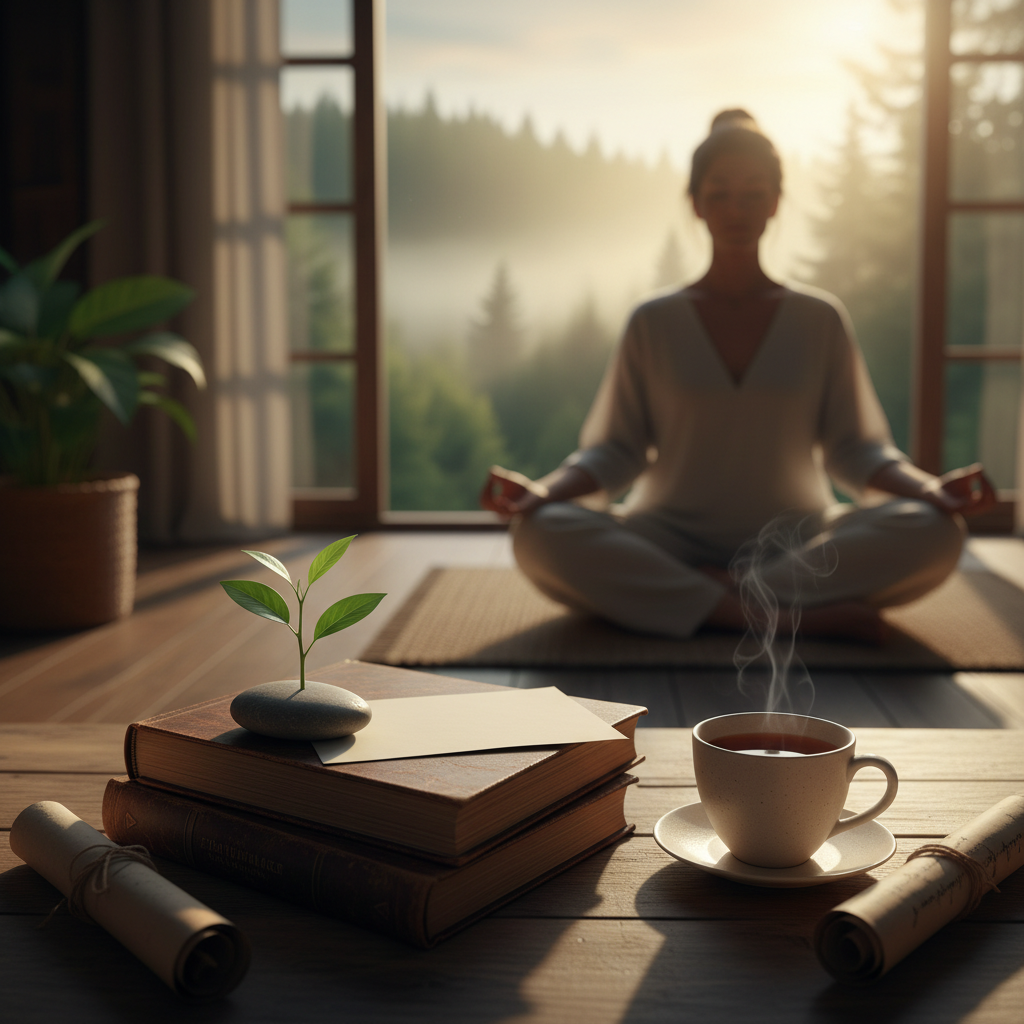
- Morning stillness: Before your phone, before your to-do list — three conscious breaths. An acknowledgment that you are alive. This is not nothing. This is everything.
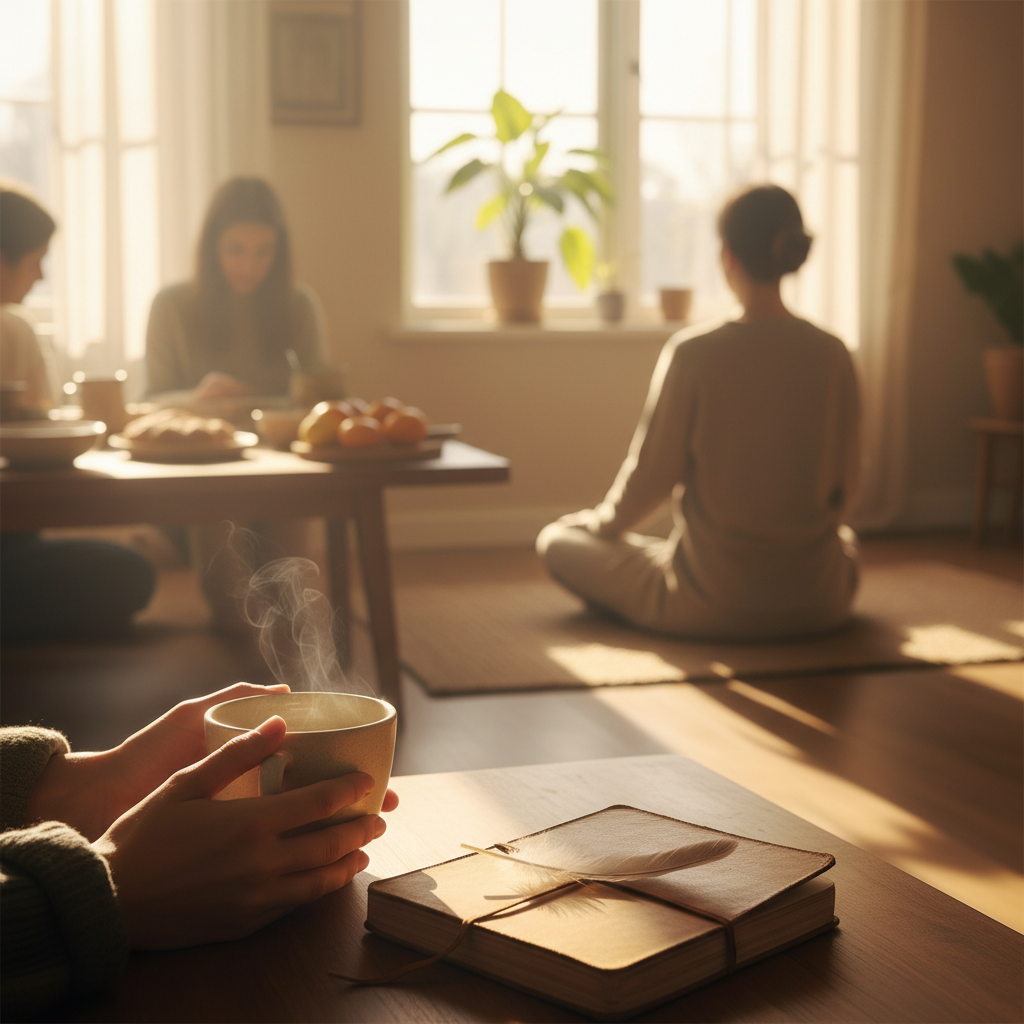
- Eating with gratitude: Research from UC Berkeley's Greater Good Science Center consistently links gratitude practices to increased wellbeing, prosocial behavior, and even improved sleep. When you pause before a meal — not to perform a ritual, but to genuinely notice — something in you settles.
- Service as spiritual practice: Every act of genuine care — listening fully, helping without expectation, showing up for someone — is a spiritual act. Not symbolically. Literally. The research on helper's high shows that acts of service activate the same neural reward pathways as receiving pleasure. We are wired to connect. Generosity is not sacrifice. It is alignment.
- Humility as a daily reset: Ego is not the enemy. But when we soften our need to be right, to be seen, to control outcomes — something opens. Call it humility, call it surrender, call it the breath after the exhale. The mystics called it grace.
- Ritual as anchor: Lighting a candle. Walking without earphones. Writing one true sentence before sleep. Ritual doesn't have to be religious to be sacred. It just has to be intentional — a moment where you say, with your body and attention: This matters. I am here.
Ethics, Connection, and the Spirituality of How We Treat Each Other
Perhaps the most overlooked dimension of spiritual life is the most visible one: how we treat people.
Every wisdom tradition, at its core, returns to this. The golden rule. The Bodhisattva vow. Ubuntu — the African philosophy of "I am because we are." The way you speak to someone who is tired, or frightened, or simply having a bad day — this is your spiritual practice in action, or it isn't happening at all.
Philosopher and theologian Thomas Merton wrote that the spiritual life is not about withdrawal from the world — it is about learning to see it more clearly, and respond to it more lovingly. Spirituality without ethics is theater. Ethics without spiritual grounding can become rigid and exhausted. Together, they become something alive.
When you choose patience over reaction. When you offer presence instead of advice. When you acknowledge another person's humanity even when it costs you something — you are not just being kind. You are practicing the deepest form of the sacred: Transformational Love made tangible, made daily, made real.
A Gentle Closing — and an Invitation
Spirituality doesn't need to return to daily life through a grand awakening. It returns the way dawn does — slowly, then all at once, and mostly because you were facing the right direction.
You don't have to believe a particular thing. You don't have to sit in perfect stillness or follow any specific path. You only have to be willing to pay attention — to your breath, to the people in front of you, to the quiet voice underneath the noise of your days that keeps saying: This is the life. This is it. Be here for it.
The sacred was never somewhere else. It was always threaded through the ordinary, waiting for you to notice.
So tonight, before sleep — can you name one moment from today when you felt genuinely, quietly present? Not productive. Not impressive. Just here, and alive, and connected. Rest with that. Let it be enough. Let it be everything.