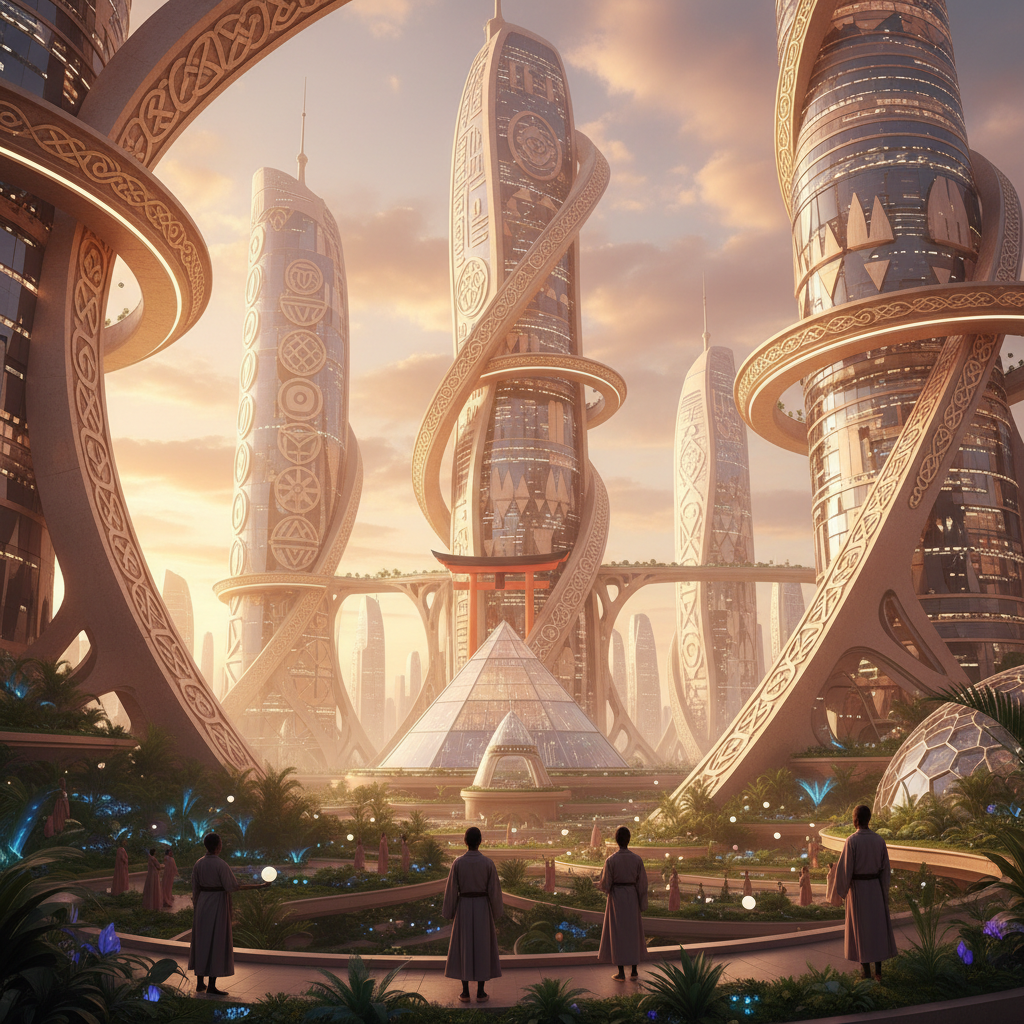
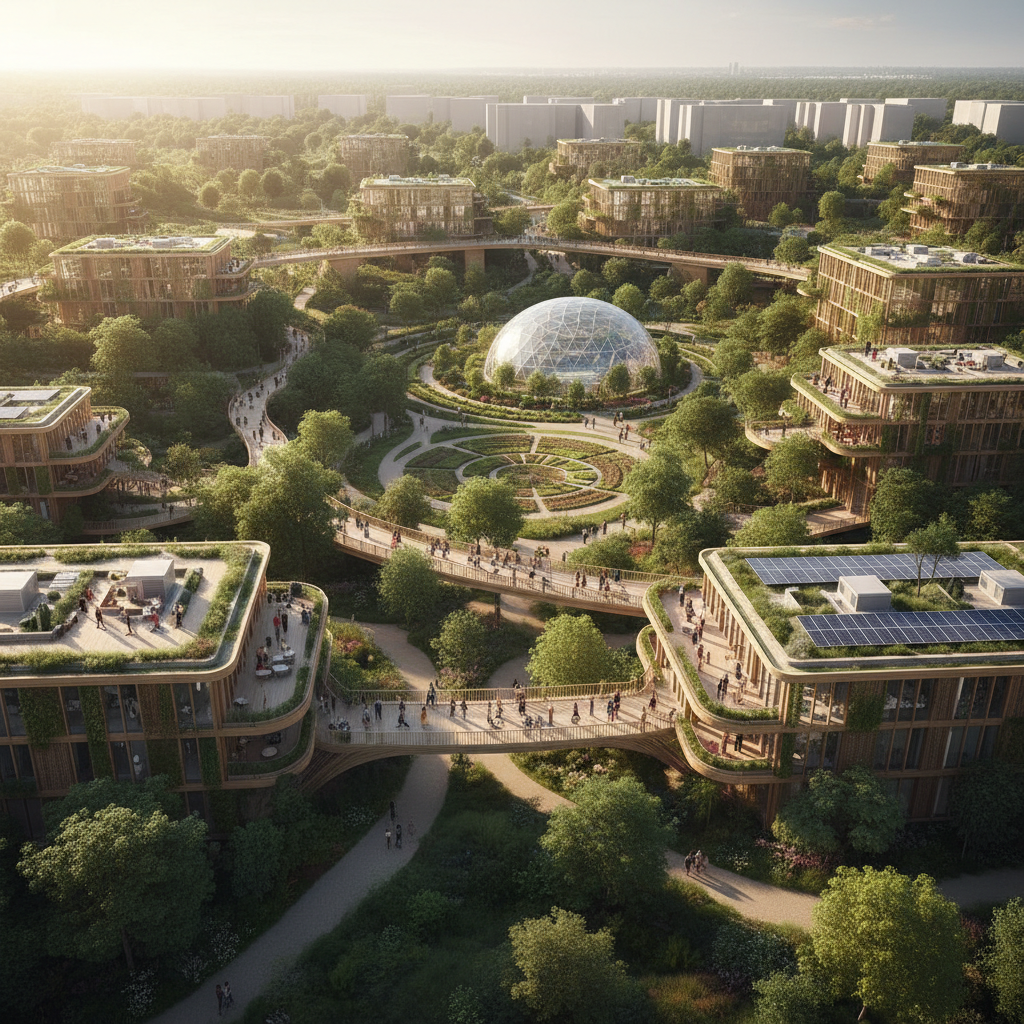
Imagine stepping outside your front door and feeling — immediately, instinctively — that the city around you is for you. Not just functional. Not merely convenient. But genuinely, architecturally, intentionally designed to support your wellbeing. The air moves through tree-lined corridors. A community garden hums a few streets away. There are benches placed not for efficiency, but for conversation. You walk to a farmers' market, pass a meditation studio, and sit beside a small urban creek that someone, somewhere, decided was worth restoring.
This is not a utopian fantasy. It is the direction that some of the world's most visionary urban planners, public health researchers, and community advocates are now calling wellbeing infrastructure — and it may be the most important design conversation of our time.
The City as a Living System
For most of the 20th century, cities were built around productivity, transit efficiency, and economic growth. The human nervous system was rarely part of the blueprint. And we are living with the results: rising rates of anxiety, loneliness, disconnection from nature, and a collective sense of environmental overwhelm that many people can't quite name but deeply feel.
What researchers are now confirming is what many of us have always sensed in our bodies — our environments shape our inner state in profound ways. A 2019 study published in Landscape and Urban Planning found that urban residents who had regular access to green space reported significantly lower levels of cortisol, the body's primary stress hormone. The city isn't just a backdrop. It is a co-regulator of your nervous system.
"The built environment is one of the most powerful determinants of health — more powerful, in many cases, than individual behaviour or access to healthcare."
— Richard J. Jackson, former Director of the CDC's National Center for Environmental Health
When we begin to see the city as a living system — one that either nourishes or depletes the people within it — everything changes. Streets become more than transit routes. They become invitations to move, to pause, to connect. Buildings become more than containers. They become environments that breathe, that hold community, that support the full spectrum of human experience.
Wellbeing Infrastructure: What It Actually Looks Like
Wellbeing infrastructure isn't a single policy or a luxury amenity. It is a holistic reimagining of how urban space serves human flourishing. It weaves together several interconnected strands:
- Walkability and movement corridors — cities designed so that walking and cycling feel natural, safe, and pleasurable rather than stressful. Research from the Walk Score research database consistently shows that walkable neighborhoods correlate with reduced rates of obesity, depression, and cardiovascular disease.
- Nature integration — urban forests, pocket parks, bioswales, rooftop gardens, and rewilded riverbanks that return ecological rhythm to concrete landscapes. The concept of biophilic design, championed by researchers like Stephen Kellert, recognises our innate need for contact with living systems.
- Community gathering spaces — plazas, markets, libraries, and neighborhood hubs that are genuinely welcoming, free of charge, and designed for lingering and spontaneous connection rather than consumption.
- Local and regenerative food systems — community gardens, urban farms, and proximity to fresh, seasonal, culturally meaningful food. Access to nourishing food is not a wellness trend — it is a foundational act of care.
- Wellness and healing businesses — yoga studios, therapists, apothecaries, movement spaces, and integrative health practitioners woven into neighborhood fabric, not siloed into expensive wellness districts accessible only to the privileged few.
- Quiet and sensory relief — noise reduction policies, pedestrian zones, and intentional stillness built into urban planning, recognising that the overstimulated nervous system needs spaces to exhale.
What unites all of these is a single, radical premise: that the purpose of a city is the flourishing of its people. Not its GDP. Not its skyline. Not its efficiency metrics. Its people — in their full embodied, relational, spiritual complexity.
Cities Already Moving in This Direction
This is not purely theoretical. Cities around the world are beginning to embody these principles in quietly revolutionary ways.
Copenhagen has long prioritised cycling infrastructure so completely that over 62% of residents commute by bike — not because they were told to, but because the city made it the most natural, enjoyable choice. Singapore has integrated nature so thoroughly into its urban architecture that it is now known as a "City in a Garden." The Happy City initiative, founded by urban planner Charles Montgomery, is working with municipalities globally to redesign public space around connection and mental health — based on the compelling research in his book Happy City: Transforming Our Lives Through Urban Design.
And then there is the growing "15-minute city" model — pioneered by urban theorist Carlos Moreno and adopted by Paris under Mayor Anne Hidalgo — which proposes that every resident should be able to reach all their daily needs within a 15-minute walk or cycle. Not just convenience. Genuine rootedness. The felt sense of belonging to a place.
These are not perfect systems. But they are living proof that intention, translated into infrastructure, changes how people feel in their daily lives. It changes how connected they feel. How safe. How seen.
The Inner Dimension of Urban Design
There is something even deeper here, worth sitting with for a moment.
The environments we inhabit are not separate from our inner lives. They are, in a very real sense, an expression of collective values — a physical manifestation of what a society believes its people deserve. A city full of advertising, noise, traffic, and concrete sends a message to every body that moves through it. A city with gardens, gathering spaces, clean air, and room to breathe sends a different one entirely.
In the VIBEUP framework, Environment is not a backdrop to conscious living. It is one of the four dimensions of a whole, integrated life. The spaces we inhabit either support our Purposeful Presence or erode it. They either deepen our sense of Co-Creative Communion — our felt belonging to something larger — or fragment it.
When cities are designed with care for the nervous system, the spirit, the body, and the community, they become partners in our evolution rather than obstacles to it. They become — in the most grounded, practical sense — sacred spaces.
So the question worth carrying into your day is not only what kind of city do we want to build? It is: what kind of inner life do we want our cities to make possible? And from that clarity — that grounded, embodied vision — the design work begins.
A Gentle Invitation
Today, as you move through your neighborhood, try something small. Walk one route you wouldn't normally take. Notice what the built environment asks of your body — does it invite you to slow down, or speed up? Does it offer beauty, or only utility? Does it create opportunities for eye contact, for rest, for a brief exchange with a stranger?
You don't have to wait for a city to redesign itself to begin living as though wellbeing is infrastructure. You can vote for it, advocate for it, and — right now, today — choose it. Choose the route with the trees. Sit in the park. Support the local wellness practitioner. Attend the community meeting about the empty lot on your street.
The future of cities is being written in small, daily acts of choosing life over mere efficiency. And you are already part of that story.