What if the systems we inherited were never designed for us to truly thrive — only to function?
Pause with that for a moment. Not as a criticism. Not as a cause for despair. But as an honest opening — a crack of light through which something new is already beginning to move.
We are living at a rare threshold. The old structures — economic, educational, medical, social — are showing their seams. Not because they were evil, but because they were built for a different era, a different understanding of what human beings are and what we actually need. They were built for output, not for wholeness. For productivity, not for presence. For growth at any cost, not for regeneration.
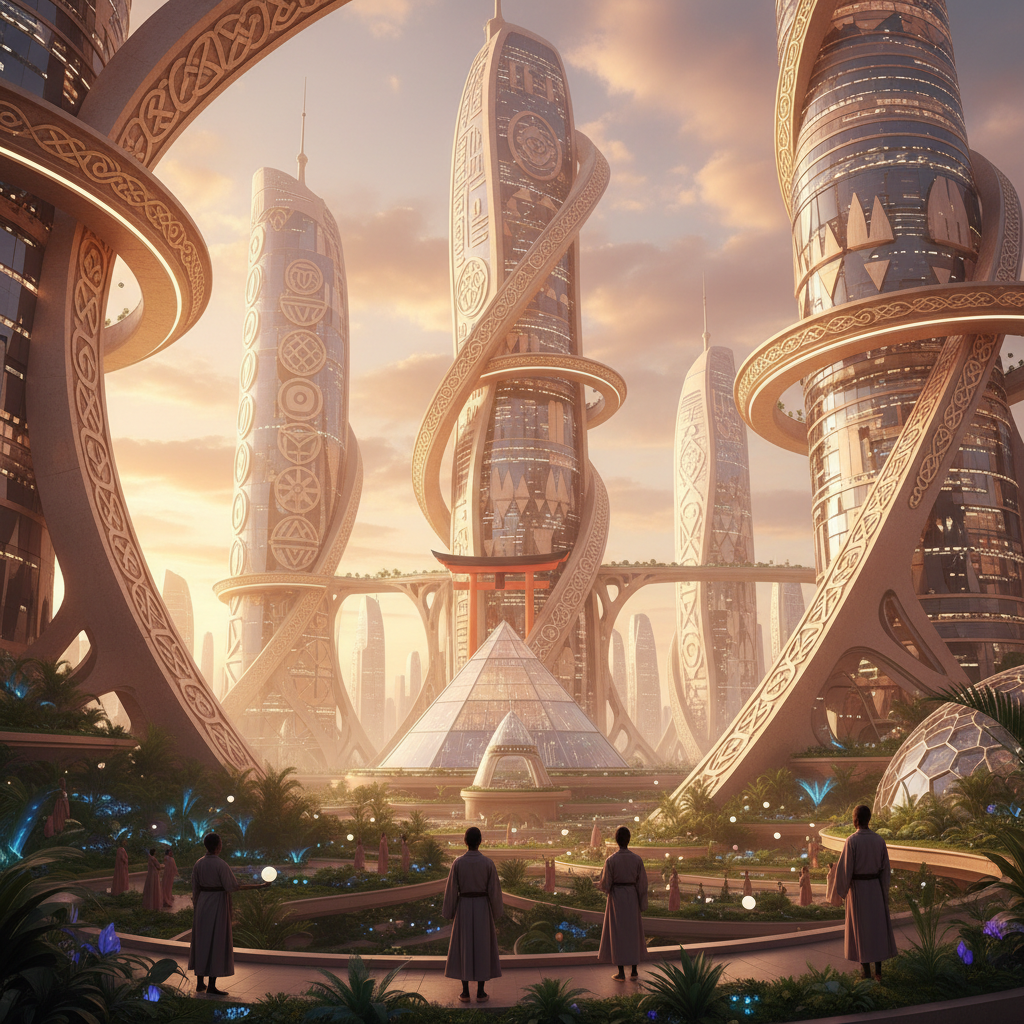
And yet, across every dimension of life — in laboratories and living rooms, in indigenous wisdom circles and tech incubators — something is quietly being rebuilt. New blueprints are emerging. Not from one visionary at the top, but from thousands of conscious, grounded humans asking the same essential question:
"What kind of world do we want to live in — and what will it take to actually build it?"
This is that conversation.
From Extraction to Regeneration: A New Economic Logic
The economy we inherited was designed around a simple premise: extract, produce, consume, discard. For a time, it generated extraordinary material wealth. It also generated extraordinary harm — ecological collapse, widening inequality, and a deep disconnection between human wellbeing and the metrics we use to measure it.
The emerging alternative isn't anti-growth. It's pro-life. Kate Raworth's Doughnut Economics offers one of the most elegant reframings: an economy that meets the needs of all people within the means of the living planet. Not a ceiling. A circle. A system that nourishes rather than depletes.
Regenerative economics integrates what was previously externalised — the health of ecosystems, the dignity of workers, the wellbeing of future generations. Cities like Amsterdam have already begun piloting this framework. Community land trusts, circular supply chains, and cooperative ownership models are no longer fringe experiments. They are working prototypes of what comes next.
The shift required here is both structural and spiritual: from a worldview of scarcity and competition to one of co-creative communion — one of VIBEUP's own core values. When we recognise that we are interdependent, the logic of regeneration becomes not just ethical but obvious.
Conscious Technology and the Architecture of Attention
Technology is not inherently harmful. But technology designed to capture and commodify human attention — without regard for psychological health or social cohesion — is. Research from the Journal of Social Media and Society consistently links algorithmically-driven platforms to increased anxiety, polarisation, and reduced capacity for deep focus.
Conscious technology asks different questions at the design stage: Does this expand human agency or diminish it? Does it deepen connection or simulate it? Does it serve life — or extract from it?
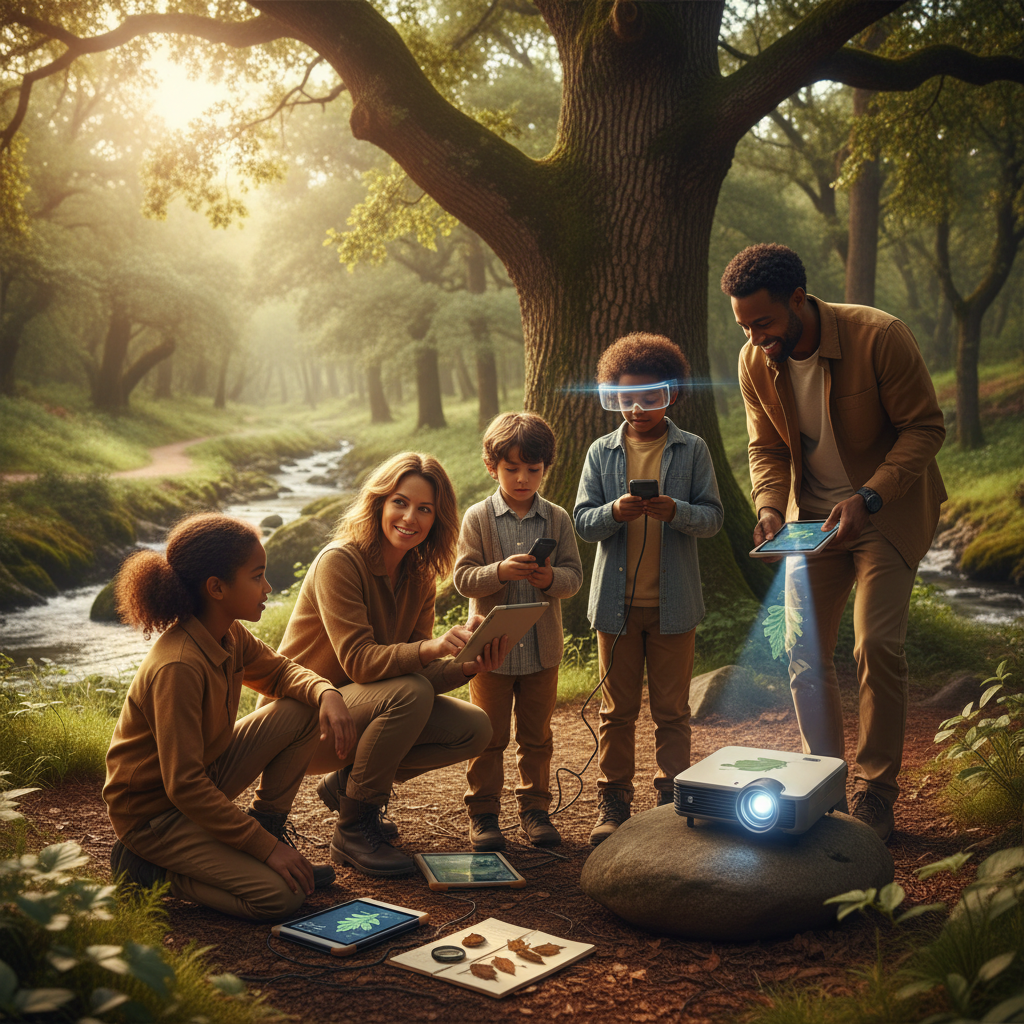
Movements like the Center for Humane Technology are already working with policymakers and engineers to redesign digital environments around human flourishing. The emerging field of "calm technology" — inspired by the original work of Mark Weiser and John Seely Brown — envisions tools that inform without overwhelming, that support presence rather than fragment it.
When technology aligns with purposeful presence, it becomes something sacred: a bridge, not a distraction. The question isn't whether we use it. It's whether we use it consciously.
Healing Systems That Actually Heal
The dominant healthcare model was built around disease management. Waiting for breakdown, then intervening. This approach saves lives — and it is incomplete. It largely ignores the terrain in which illness emerges: chronic stress, disconnection, nutritional depletion, lack of meaning, environmental toxins, and suppressed emotional experience.
Preventative and integrative medicine is changing that. Researchers at the Ornish Institute have demonstrated that lifestyle interventions — including stress management, community, movement, and whole-food nutrition — can reverse heart disease and influence gene expression. The body, it turns out, is exquisitely responsive to care.
A new healthcare system listens to the whole person. It integrates the Internal Self (emotional and psychological health), the External Self (body and physical environment), and even the relational and communal dimensions of wellbeing. It trains practitioners in empathy as rigorously as it trains them in pharmacology. And it recognises that healing is not the absence of disease — it is the presence of aliveness.
Education, Community, and the Ground of Spiritual Maturity
What are we actually preparing young people for? If the answer is "jobs and tests," we are already behind. The world they are inheriting requires something far more nuanced: emotional intelligence, systems thinking, creative resilience, and the ability to live in uncertainty with grace.
Holistic education — as explored through movements like Waldorf education, contemplative schooling, and place-based learning — treats the child as a whole being. It cultivates curiosity, not compliance. It values how a child learns to relate to themselves and others as much as what they memorise.
Alongside education, the revival of community-based living offers one of the most powerful antidotes to modern fragmentation. Co-housing projects, intentional communities, and neighbourhood-scale mutual aid networks are demonstrating what science already confirms: social connection is among the strongest predictors of longevity and mental wellbeing, as highlighted in the landmark Harvard Study of Adult Development.
And beneath all of this — quietly, insistently — is the question of spiritual maturity. Not religion, necessarily. But the cultivation of inner depth: the capacity to witness oneself without judgment, to hold paradox, to act from values rather than fear, to feel the sacredness of being alive and responsible for one another.
This is what VIBEUP calls Sacred Sovereignty — not independence from others, but a rooted, clear, embodied sense of self that makes genuine connection possible. It is the foundation upon which all new systems must ultimately rest. Without inner transformation, outer structures merely replicate the same patterns in new clothing.
A Closing Reflection
The new systems humanity needs are not waiting to be invented by someone else, somewhere else. They are being woven — right now — from the choices of people who have decided to live more consciously, to consume more carefully, to build more cooperatively, to speak more truthfully, and to remain curious about what it means to be fully, lovingly human.
You are already part of this.
Every time you pause before reacting. Every time you choose nourishment over numbness. Every time you show up for your community, tend to your inner life, or question a system that doesn't serve life — you are participating in the most important creative act of our time.
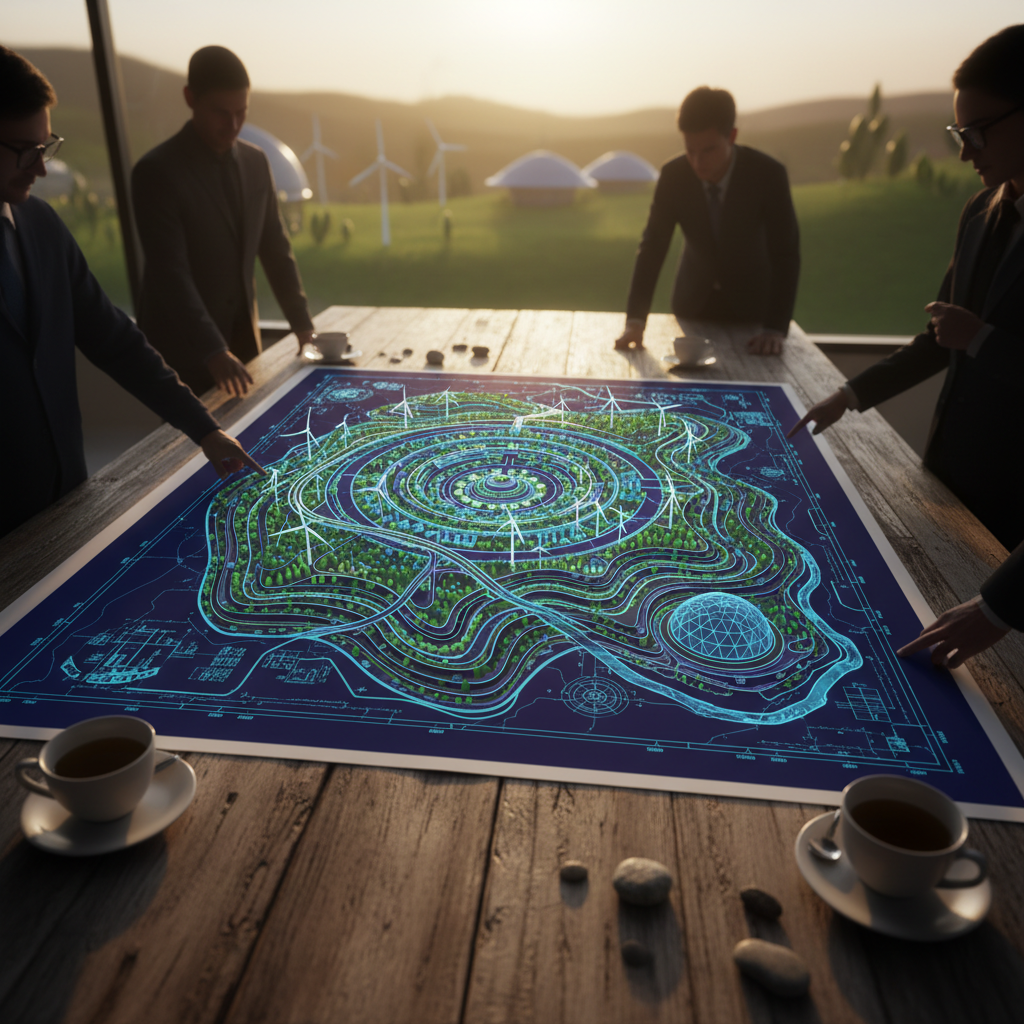
The blueprint isn't drawn from the top down. It's grown from the ground up.
What's one system in your own life — internal or external — that you feel ready to redesign? Sit with that question. Let an answer rise, not from urgency, but from clarity.