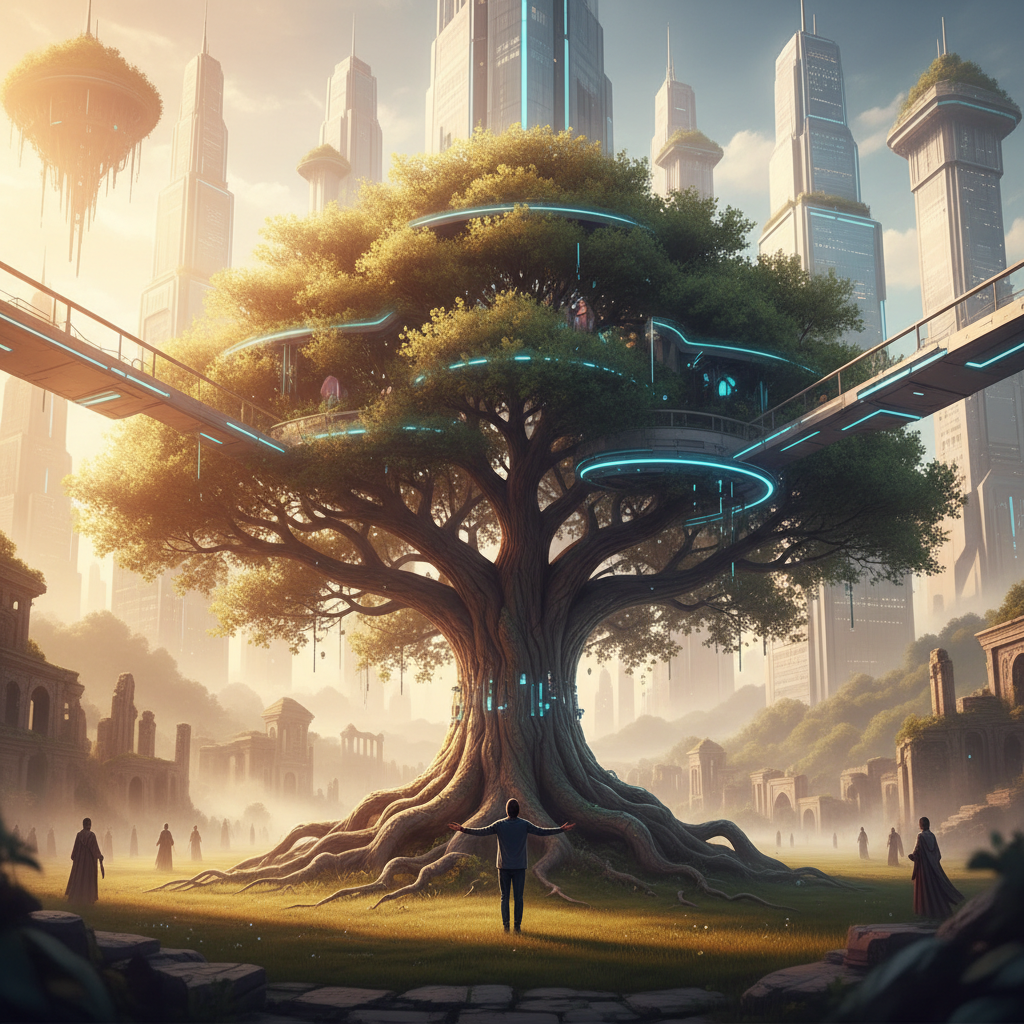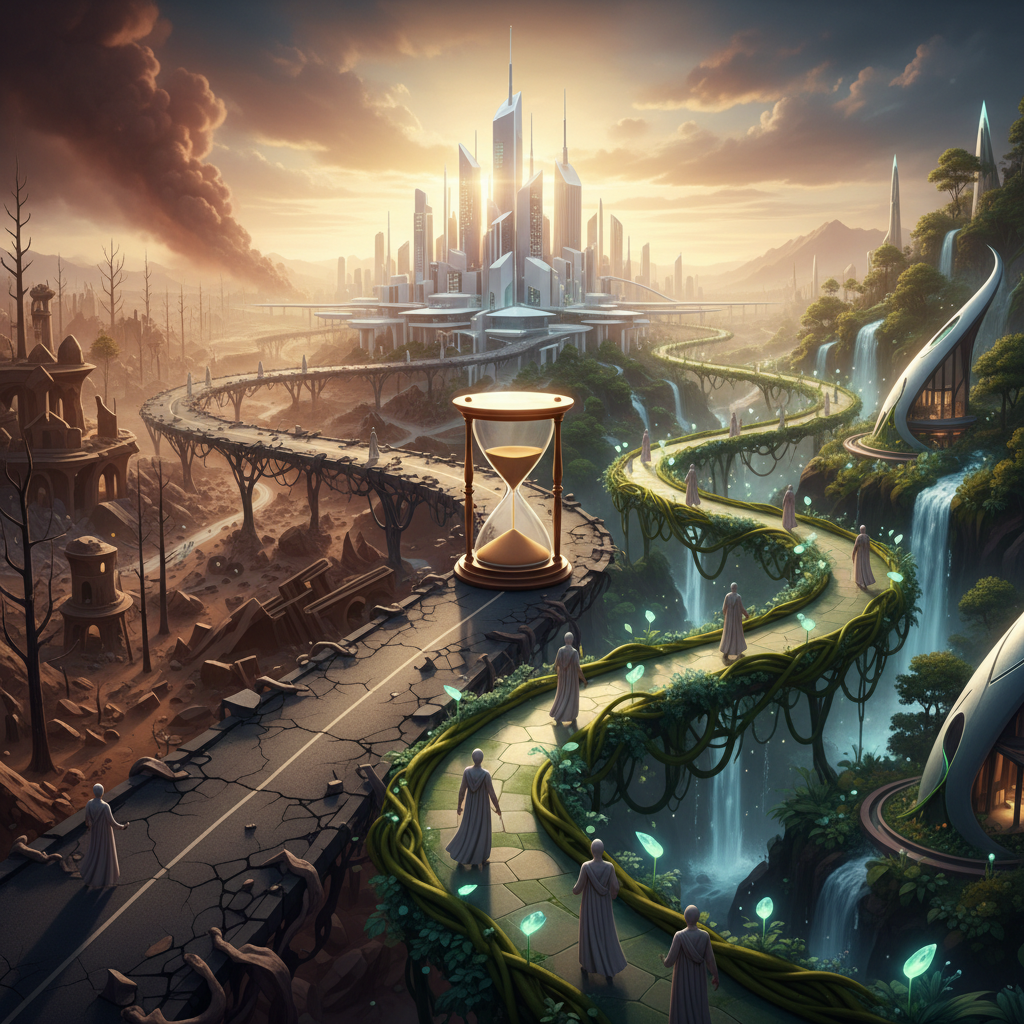
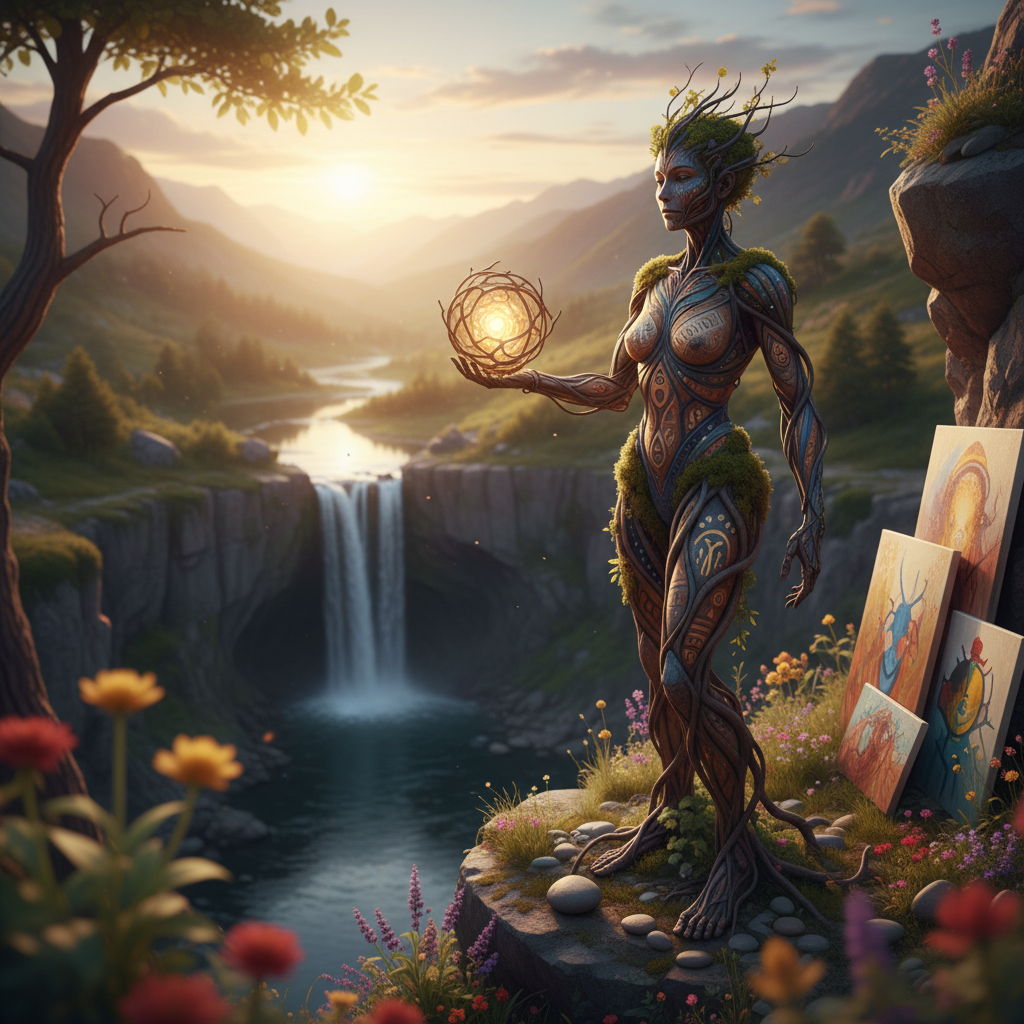
What if beauty isn't decorative — what if it's developmental?
Pause for a moment and recall the last time something stopped you completely. A slant of afternoon light across a wooden floor. A piece of music that moved through you before your mind could name it. A face — a stranger's, or someone beloved — caught in a moment of pure, unguarded aliveness. Something in you recognized it. Not analyzed it. Recognized it.
That recognition is not accidental. It may be one of the most ancient and underestimated pathways of human evolution we have.
Beauty as a Biological and Spiritual Signal
Science has long been cautious around beauty — it sounds too soft, too subjective for rigorous inquiry. And yet, the evidence is quietly radical. Neuroscientist Semir Zeki's research at University College London found that the experience of visual beauty activates the medial orbito-frontal cortex — the same region associated with reward, meaning, and emotional bonding. In other words, your brain treats beauty as nourishment. Not luxury. Nourishment.
Environmental psychologists Rachel and Stephen Kaplan developed Attention Restoration Theory, demonstrating that exposure to natural beauty — particularly environments with what they called "soft fascination" (a flowing river, a canopy of leaves) — restores directed attention, reduces cognitive fatigue, and enables deeper reflection. The beautiful, it turns out, doesn't distract us from awareness. It returns us to it.
But there is a layer beneath neuroscience that ancient traditions have always understood: beauty is a transmission. In many Indigenous and Eastern philosophies, beauty is not merely perceived — it is communicated between living things. The Navajo concept of hózhó — often translated as beauty, harmony, and balance — is not an aesthetic preference but a cosmological orientation. To walk in beauty is to walk in right relationship with all of existence.
"Beauty is not a luxury. It is a way of creating the world — and of being created by it."
— John O'Donohue, Beauty: The Invisible Embrace
O'Donohue, the Irish philosopher and poet, spent his life arguing that beauty is the most neglected form of spiritual intelligence in modern culture. He wasn't being romantic. He was being precise.
The Environment as Mirror: What We Surround Ourselves With Shapes Who We Become
There is a quiet intelligence in our external world. The spaces we inhabit — our homes, workplaces, the streets we walk, the screens we stare into — are in constant, subtle conversation with our nervous systems. This is not metaphor. This is Environmental Psychology 101.
When your environment is chaotic, cluttered, or aesthetically deadened, your nervous system registers it as low-grade threat. Cortisol edges upward. Attention fragments. The capacity for presence narrows. Conversely, environments designed with intention — with light, natural materials, coherent form, living plants, meaningful objects — signal safety and expansion to the body. You don't just feel better. You think differently. You open.
This is why the dimension of Environment in conscious living isn't about interior design trends. It's about recognizing that your surroundings are an extension of your internal landscape — and that tending to one nourishes the other. A deliberately beautiful home isn't vanity. It's an act of self-care that speaks directly to the nervous system, the spirit, and the creative imagination simultaneously.
Consider what shifts when you:
- Place a single fresh flower on your desk rather than letting the surface become a graveyard of function
- Choose a walk through a park instead of a shortcut through concrete
- Light a candle and sit in its warmth before beginning the day
- Curate what art — if any — lives on your walls, asking: does this expand me or diminish me?
- Eat a meal on a beautiful plate, slowly, with your full attention
These are not trivial choices. They are acts of alignment — small decisions that accumulate into a life that feels, over time, inhabited rather than merely occupied.
Art, Ritual, and the Human Form as Sacred Expression
Humans have been making art for at least 73,000 years — a fact confirmed by the discovery of abstract ochre drawings in Blombos Cave, South Africa. Long before agriculture, cities, or writing, we were making marks. Creating beauty. This is not incidental to human evolution. It is human evolution.
Art-making activates integration across the brain's hemispheres. It bridges language and sensation, logic and feeling, memory and imagination. Researchers at multiple institutions studying music and neuroplasticity have found that creative engagement restructures neural pathways, builds emotional resilience, and deepens the capacity for empathy. Beauty, when we participate in its creation — not just its consumption — becomes a practice of embodied transformation.
And then there is the human form itself. The body — yours, others' — is extraordinary. The way grief moves across a face. The curve of a hand extended in offering. The way a person carries their history in their posture, and how, when healing begins, the body literally opens. There is profound beauty in witnessing this. In being witnessed. In the practice of seeing others — truly seeing them — as one of the most radical acts of love available to us.
Ritual, too, is beauty in structured form. The act of returning again and again to a practice — morning stillness, evening gratitude, seasonal ceremony — trains the soul to recognize what is sacred in the ordinary. Ritual is how we say: this moment matters. I am paying attention.
A New Relationship with the Beautiful
Conscious evolution asks us to expand not just our thinking, but our perceiving. To develop what philosopher Alexander Nehamas calls "the promise of happiness" that beauty holds — not as passive pleasure, but as an invitation to engage more deeply with life.
To evolve consciously is to become increasingly awake to beauty — not as escapism, not as aesthetic elitism, but as a form of attention that heals. It is the recognition that the world is more alive, more layered, more responsive than our busy, contracted minds have allowed us to notice.
When we open to beauty, we practice the same skill that underlies all spiritual growth: presence. The willingness to be here, fully, without rushing to extract usefulness from the moment. Beauty teaches us to receive. And receiving is, for many of us, the deepest practice of all.
A Gentle Invitation
Today, move through at least one hour with this single question alive in your awareness: Where is the beauty in this? Not as a performance of positivity — but as a genuine act of attunement. In the texture of your coffee cup. In the quality of light falling across a stranger's shoulder. In the sound of your own breath in a quiet room.
Notice what shifts in you. Notice where your body softens. That is the beginning.
Further Exploration
- Beauty: The Invisible Embrace by John O'Donohue — A luminous inquiry into beauty as a spiritual force and way of being
- Neural Correlates of Beauty — Semir Zeki, Frontiers in Human Neuroscience — The neuroscience of aesthetic experience and its relationship to reward and meaning
- What Is Art For? — Ellen Dissanayake, TED — A compelling exploration of art-making as a core human behavior and evolutionary necessity