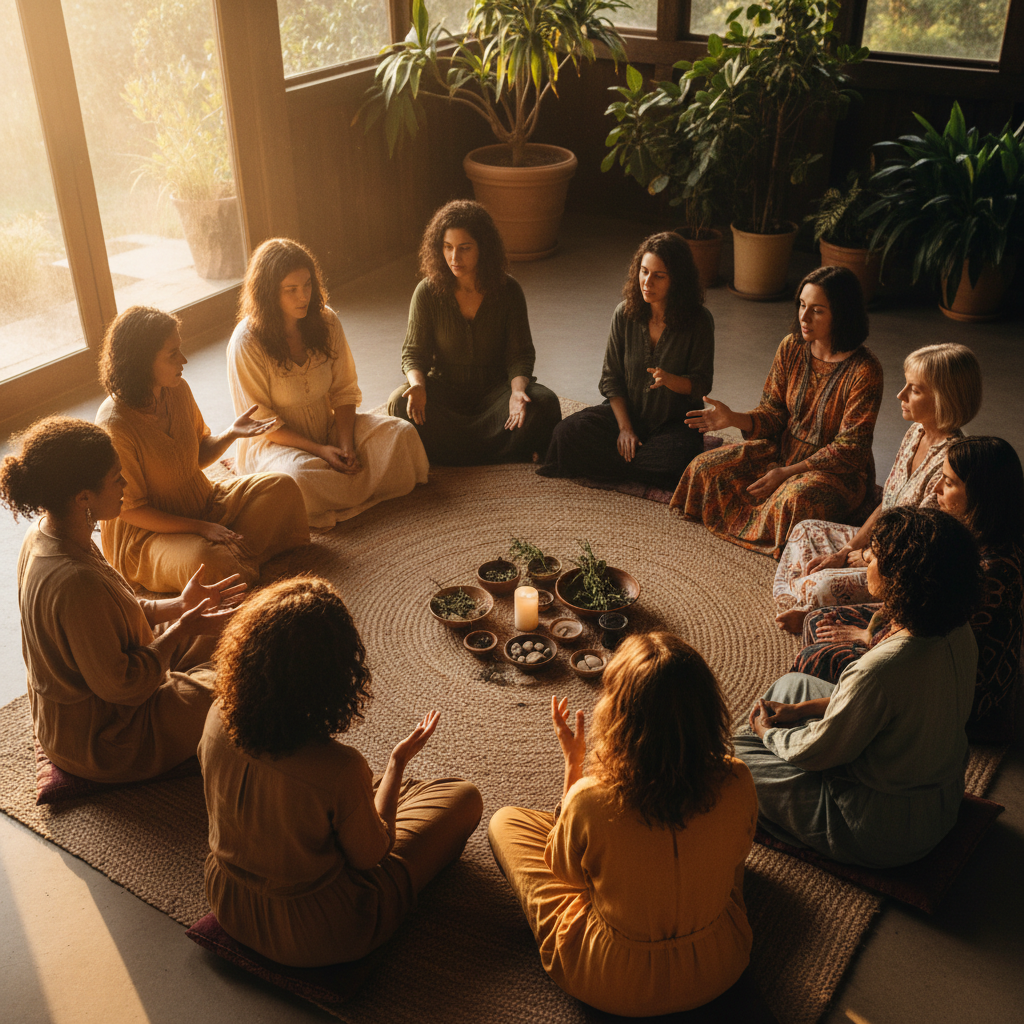
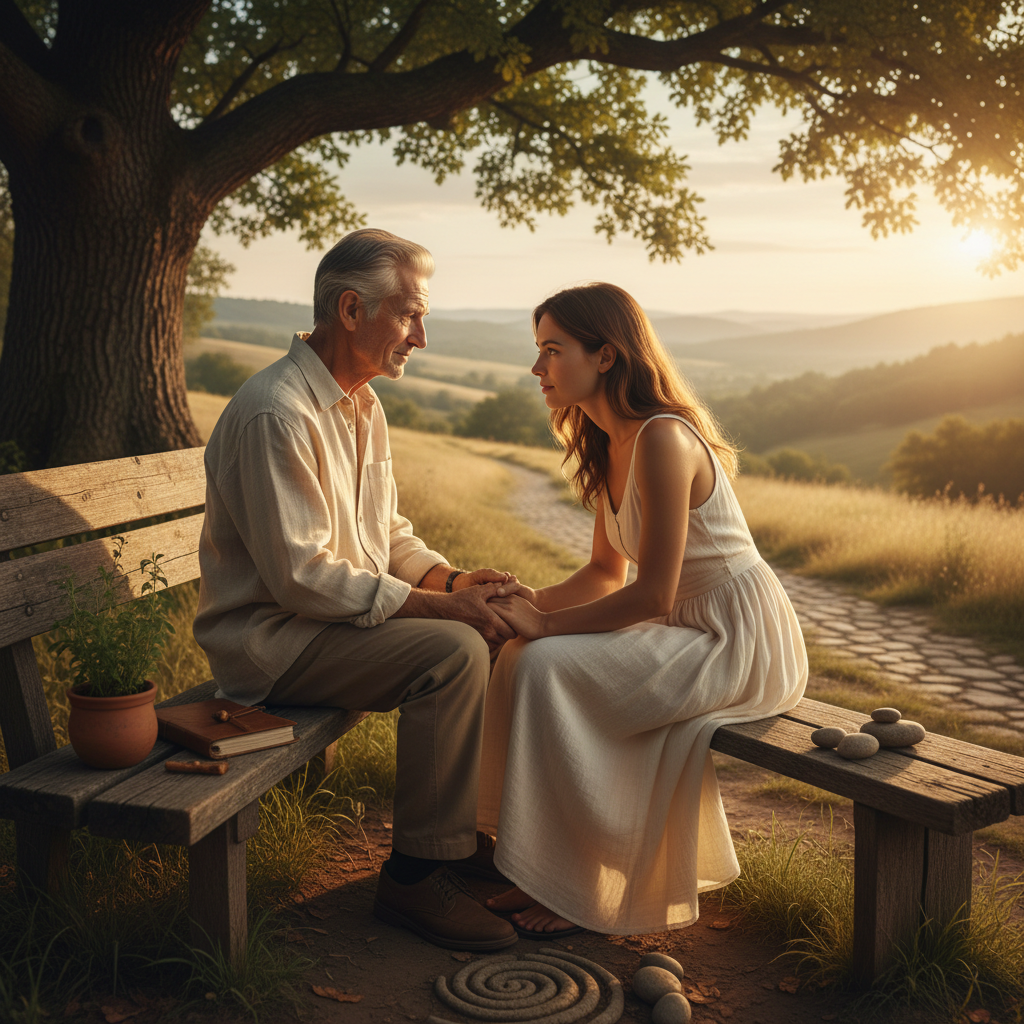
When did we stop sitting at the feet of those who had walked further?
Somewhere between the rise of the algorithm and the cult of the new, something quietly slipped away. The elder. The wisdom keeper. The one who had loved deeply enough, lost enough, and lived long enough to know what actually matters. In our rush toward the future, we stopped turning toward those who had already navigated the terrain we're still learning to cross.
This isn't a nostalgic longing for some idealized past. It's an honest recognition — one that modern psychology, neuroscience, and ancient wisdom traditions all seem to agree on — that intergenerational connection is not optional for conscious living. It is foundational to it.
The Wisdom Gap We're Not Talking About
We live in a culture that equates novelty with value. New frameworks, new influencers, new systems. And while innovation carries real gifts, it can quietly erode something precious: our relationship with accumulated wisdom — the kind that only comes through decades of living, grieving, choosing, and integrating.
Research published in the journal Proceedings of the National Academy of Sciences found that wisdom — encompassing emotional regulation, empathy, self-reflection, and tolerance for uncertainty — tends to deepen meaningfully with age. These aren't abstract qualities. They are precisely the capacities we are all reaching toward in conscious evolution.
And yet, many of us have little authentic contact with elders. Not as authority figures. Not as people to perform respect toward. But as genuine companions in the deeper conversation about what it means to be human.
"The old ones carry the seeds of our becoming. When we stop listening, we stop growing roots."
— Angeles Arrien, cultural anthropologist and author of The Second Half of Life
What Elders Actually Offer: Beyond Authority, Into Presence
Let's be honest about something important. Restoring reverence for elders is not about reinstating hierarchies or surrendering your own discernment. Sacred Sovereignty — one of VIBEUP's deepest values — means that no one gets to be the final author of your inner life. Not even someone with decades of wisdom.
But wisdom and authority are different things entirely.
An elder, in the truest sense, is not someone who tells you what to do. They are someone whose presence opens something in you. They carry a certain quality of stillness — earned through the fires of their own healing and transformation — that can help you access your own clarity when you're too close to see.
In many Indigenous traditions, elders serve as wisdom keepers — not as gatekeepers, but as living repositories of pattern recognition. They've seen seasons turn. They've watched what endures and what collapses. The Sacred Fire Foundation has spent decades documenting and restoring intergenerational wisdom practices across cultures, noting that communities with living elder-relationships show greater resilience, cohesion, and collective wellbeing.
Consider what genuine elder wisdom can offer across the four dimensions of a conscious life:
- Internal Self: A seasoned mentor can help you witness your patterns from the outside — offering a reflection that feels less like judgment and more like recognition. "I've seen this before. In myself. Here's what I learned."
- External Self: Elders who have moved through illness, aging, and embodied change carry a different relationship with the body — one of reverence, patience, and hard-won integration.
- Relationships: Decades of loving — and losing — teach something about intimacy that no workshop can replicate. Elders who have done their own work become living evidence that love can deepen, not diminish, over time.
- Environment: Many elders carry a felt relationship with land, seasons, and natural rhythm that our screen-saturated world has largely severed. Being near that attunement can reawaken your own.
Reweaving the Intergenerational Thread
The longing is mutual. Research from Psychology and Aging consistently shows that elders who maintain meaningful roles as guides and mentors experience lower rates of depression, stronger cognitive vitality, and a deepened sense of purpose. The connection nourishes both directions of the thread.
So how do we actually begin to restore this? Not as a cultural mandate, but as a personal, embodied practice.
Start with one honest question
Is there an elder in your life — a grandparent, a neighbor, a teacher, a community elder — with whom you've never asked a real question? Not a polite one. A real one. "What do you know now that you wish you'd understood at my age?" That question alone can open a river.
Seek mentors, not authorities
A mentor in the conscious sense is someone who models possibility — not someone who tells you who to be. Organizations like MENTOR and informal community mentorship programs are expanding access to these relationships. But the deepest mentorship often begins with simply showing up in the presence of someone who has walked further — and being genuinely curious about what they've learned.
Offer your presence as the gift
Elders are often surrounded by people who manage them — but rarely met by people who are truly present with them. Your quality of attention, your willingness to listen without agenda, may be the most valuable thing you bring. Co-Creative Communion moves in both directions. You are not only receiving. You are witnessing a life — and that witnessing matters.
The Conscious Community That Includes Its Elders
A community that only honors those at the beginning of their unfolding is a community living in permanent adolescence. True conscious evolution — the kind that creates lasting change across generations — requires what some traditions call the "council of all ages." The fresh eyes of the young. The integrated knowing of the elder. The active building of those in between.
When we reweave elders into the fabric of our communities — not as ornaments of the past, but as active participants in the present — we create something rare and deeply needed: continuity. The sense that wisdom does not die with the individual. That something essential is being passed forward, tended, protected.
This is one of the most radical acts of Transformational Love available to us. To say to someone who has lived a full, complex, beautiful, difficult life: you matter here. Your knowing is needed. You are not finished.
A Gentle Closing Invitation
Breathe for a moment. Let this land.
Think of one person — older than you, further along the road — whose wisdom you've never truly sought. Whose life you've perhaps admired from a distance, without asking to be let in.
What would it feel like to reach out? Not to ask them to fix anything. Simply to ask them what they know.
That small act of opening — of choosing connection across the generational divide — is its own kind of evolution. It is the quiet revolution that restores what modernity forgot.
You don't have to inherit anyone's answers. But you are allowed to borrow their lantern while you find your own way.
Further Exploration
- The Second Half of Life by Angeles Arrien — A beautiful, research-informed guide to the gifts and tasks of life's elder chapters
- Conscious Aging Alliance (COA) — A movement reimagining aging as a path of wisdom, purpose, and spiritual deepening
- The Center for Practical Wisdom, University of Chicago — Rigorous academic research into the science and cultivation of wisdom across the lifespan