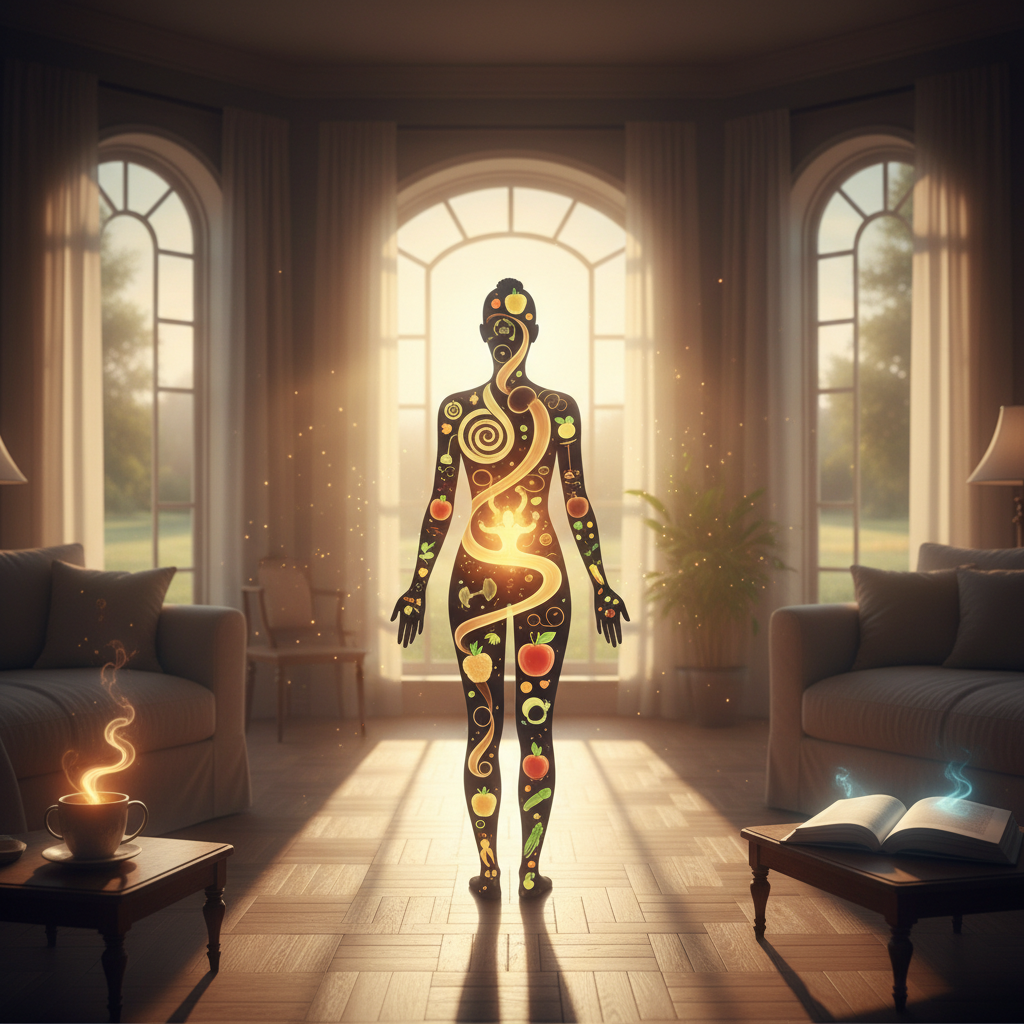

Notice, for just a moment, where your attention is right now.
Not where your eyes are pointed. Not what your hands are doing. But where the living, breathing center of your awareness actually lives in this moment. Is it here, with these words? Is it half-pulled toward a notification you haven't checked yet? Is it somewhere in yesterday, or already rehearsing tomorrow?
This is not a judgment. It's an invitation to witness something profound: your attention is always going somewhere. And where it goes — consistently, repeatedly, over days and years — is where your life is actually being built.
Attention Is Not a Tool. It Is the Thing Itself.
In most productivity conversations, attention is treated as a resource to be managed — scheduled, protected, rationed. And while there's wisdom in that framing, it still misses something essential.
Attention isn't something you have. It's something closer to what you are.
William James, the father of modern psychology, wrote in 1890 that "the faculty of voluntarily bringing back a wandering attention, over and over again, is the very root of judgment, character, and will." He considered it one of the highest human capacities — not a cognitive trick, but a moral and spiritual act.
Contemporary neuroscience agrees. Research from the Dana Foundation on the neuroscience of attention shows that what we repeatedly attend to literally reshapes neural pathways — strengthening some connections, letting others fade. Your attention is not passive. It is architectural. It builds the structure of your inner world.
In many wisdom traditions, this understanding is ancient. In Buddhist psychology, sati — often translated as mindfulness — is more precisely understood as the quality of remembering to return. To return to presence. To return to what is real and alive, rather than what is merely loud.
"Where you place your attention, you place your life."
— Winifred Gallagher, Rapt: Attention and the Focused Life
This is not metaphor. This is the lived reality of how consciousness works.
The Economy That Was Built on Your Gaze
Here is something worth sitting with: there are entire industries whose business model depends on capturing and holding your attention — not for your benefit, but for theirs.
Former Google design ethicist Tristan Harris has spent years documenting how social media platforms and apps are engineered — using behavioral psychology, variable reward schedules, and dopamine loops — to make disengagement feel almost physically difficult. This isn't accidental design. It is intentional architecture built around the vulnerabilities of the human nervous system.
The result? Studies from the American Psychological Association consistently link high social media use with increased anxiety, decreased sense of self-worth, and fragmented focus — particularly in younger populations. The average person now touches their phone over 2,600 times a day. The average attention span during digital tasks has shrunk measurably over the last two decades.
We are not broken. We are being interrupted — constantly, systematically, at scale.
When your attention is continuously harvested, something quieter gets crowded out: your own inner signal. The subtle nudge of intuition. The clarity that arrives in stillness. The sense of your own values, your own direction, your own life force moving through you. These things require space. They require your presence. And they cannot compete with an algorithm designed by a thousand engineers.
Reclaiming your attention, then, is not a lifestyle upgrade. It is an act of Sacred Sovereignty — one of VIBEUP's foundational values. It is the quiet, radical decision to be the author of your own inner life rather than a character in someone else's story.
The Spiritual Practice of Coming Back
Spiritual traditions across centuries point to the same truth: the deepest freedom is not freedom from circumstances. It is freedom of awareness. The ability to choose, moment by moment, where the light of your consciousness falls.
This is what meditation teachers mean when they say the practice is not about emptying the mind — it's about noticing when the mind has wandered, and gently, without self-criticism, returning. Not once. Not ten times. But as many times as it takes. That return — that small, humble act of coming back — is the practice. It is the strengthening of a muscle that modern life is designed to atrophy.
Research published in Science (Killingsworth & Gilbert, 2010) found that people spend nearly 47% of their waking hours thinking about something other than what they're actually doing — and that mind-wandering consistently predicted lower happiness, independent of what people were doing. Presence, the data suggests, is not just spiritually meaningful. It is the ground of wellbeing itself.
Practically, reclaiming attention might look like:
- Intentional transitions — pausing between activities with three conscious breaths before reaching for a device
- Digital boundaries as sacred structure — not as punishment, but as a container that protects your inner signal
- Single-tasking as a spiritual act — bringing your full presence to one thing, not as productivity, but as reverence
- Morning attention rituals — choosing what receives your first, freshest awareness before the world rushes in
- Nature as reset — research from the Attention Restoration Theory shows that natural environments meaningfully restore directed attention capacity
None of these are about perfection. They are about orientation. About turning, again and again, toward what is genuinely alive in you.
Your Attention Is Your Life, Offered Back to Itself
There is a version of your life that is built from distraction — from the accumulated weight of a thousand unconscious clicks, a thousand moments given away to noise. And there is another version, not more perfect, but more present — built from the quiet practice of returning. Of choosing, each morning, to give your first attention to something that nourishes the Internal Self rather than depletes it.
You are not managing a resource. You are tending a flame.
Your attention is the most intimate thing you possess. It is the instrument through which you experience love, create meaning, sense beauty, and connect with what is real. No algorithm can generate that for you. No platform can hold it safely. Only you can learn to protect and direct it — with gentleness, with intention, with growing awareness of what it means.
And every time you notice the pull of distraction and choose — even for one breath — to return to yourself, you are practicing sovereignty. You are practicing presence. You are, in the deepest sense, practicing being alive.
A Closing Invitation
Before you move to the next thing, pause here for a moment.
Place one hand on your chest. Take one slow breath. And ask yourself, with genuine curiosity rather than judgment:
What has been receiving the majority of my attention lately — and does it reflect what I actually value most?
You don't need to fix anything. Just notice. That noticing — clear, honest, soft — is already the beginning of something.
Further Exploration
- Rapt: Attention and the Focused Life by Winifred Gallagher — A beautifully researched exploration of how the quality of your attention shapes the quality of your life.
- Tristan Harris — Center for Humane Technology — Grounded, urgent work on redesigning technology around human values and reclaiming agency in the digital age.
- The Science of Attention — Mindful.org — A gentle, accessible bridge between contemplative practice and neuroscience research on training awareness.